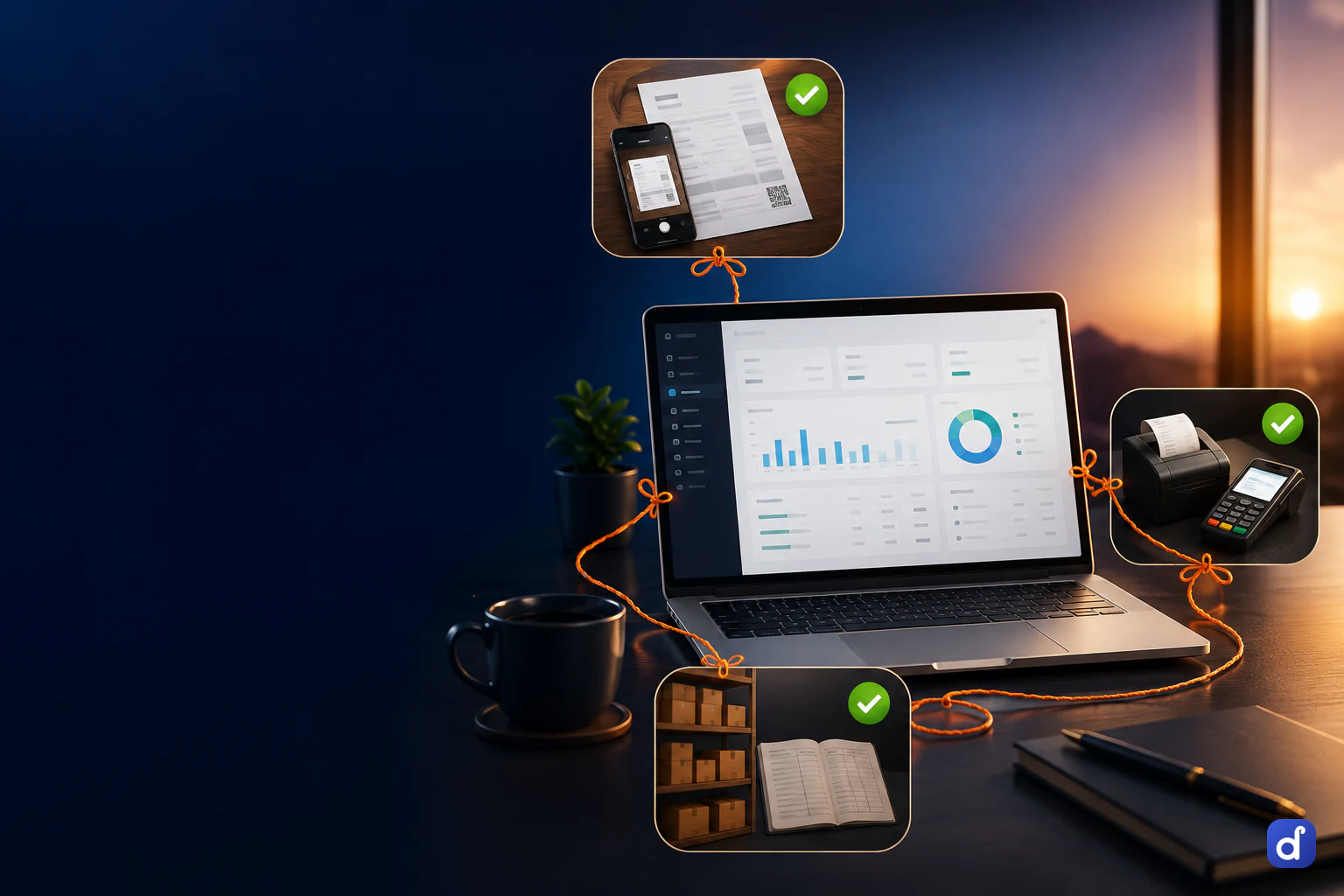
Hardware shop
Hardware shop billing for the counter and the contractor
Hardware shop billing serves two customers at once: a walk-in who needs four screws, and a contractor who takes goods on challan all week and settles at month end. Dhaaga handles both from the same items, rates and ledgers.
Where hardware billing loses money
Rates, units and credit are where the margin slips away at a hardware counter.
A different rate for every contractor
Keep a price list for a party or a segment, with quantity breaks and start and end dates. The party’s own rate is picked up wherever they are billed.
Boxes and loose pieces
Set a box as a number of pieces on the item and sell either. The rate converts with the unit or uses the price you set for that unit.
Goods sent on challan, never billed
Send goods on a delivery challan, then pull several challans into one GST invoice, so nothing that left the shop is forgotten.
Selling below cost to close a deal
Mark a minimum rate and the counter refuses any line under it. That floor is changed in the price list, never at the till.
A contractor’s month, document by document
The documents a hardware shop raises for an account customer, in order.
- Quotation
- Price the job from the contractor’s price list and send it to them.
- Sales order
- Take the confirmed job as a sales order with its lines and agreed rates.
- Delivery challans
- Each site delivery goes out on its own challan.
- One invoice
- At month end, pull the challans into a single GST invoice with HSN and tax on every line.
- Collect
- The party ledger shows the bill as due; send a reminder or a UPI link from there.
A walk-in bill and an account bill on the same day
A worked example of the two kinds of hardware customer side by side.
| What happens | What Dhaaga records | |
|---|---|---|
| Walk-in | 12 wood screws and a tube of adhesive | Screws sold loose out of a box of 100 at the loose rate, paid by UPI |
| Contractor delivery | 20 bags of wall putty and 50 metres of conduit sent to site | A delivery challan at the contractor’s price-list rates |
| Second delivery | 10 more bags two days later | A second challan on the same account |
| Month end | The contractor asks for one bill | Both challans pulled into one GST invoice with CGST and SGST per line |
| Credit check | The account is close to its limit | A warning before the next order takes it past the limit |
Questions people ask first.
Yes. Each item has its own unit, plus extra units with conversions, so one item can be bought by the bundle or box and sold by the metre or the piece.
Yes. A party price list holds their rates, with lower rates from a minimum quantity and dated revisions, and the counter uses that party’s rate ahead of your list price.
It warns rather than blocks. Set a credit limit on the party, and the counter says so before an order would take them past it.
Yes. Pick that party’s open challans when you raise the invoice and their lines come onto it.
When a consignment needs one, record the e-way bill number on the document, or generate it from inside Dhaaga after connecting a GST Suvidha Provider you use.
Put one real day through it.
Not a sandbox with sample data — your own bills, your own items, your own customers. By evening you will know whether this runs your business.